

| population | 1,340 peoples |
|---|---|
| area | 69.46 km² |
| population density | 19.3 peoples/km² |
Introduction
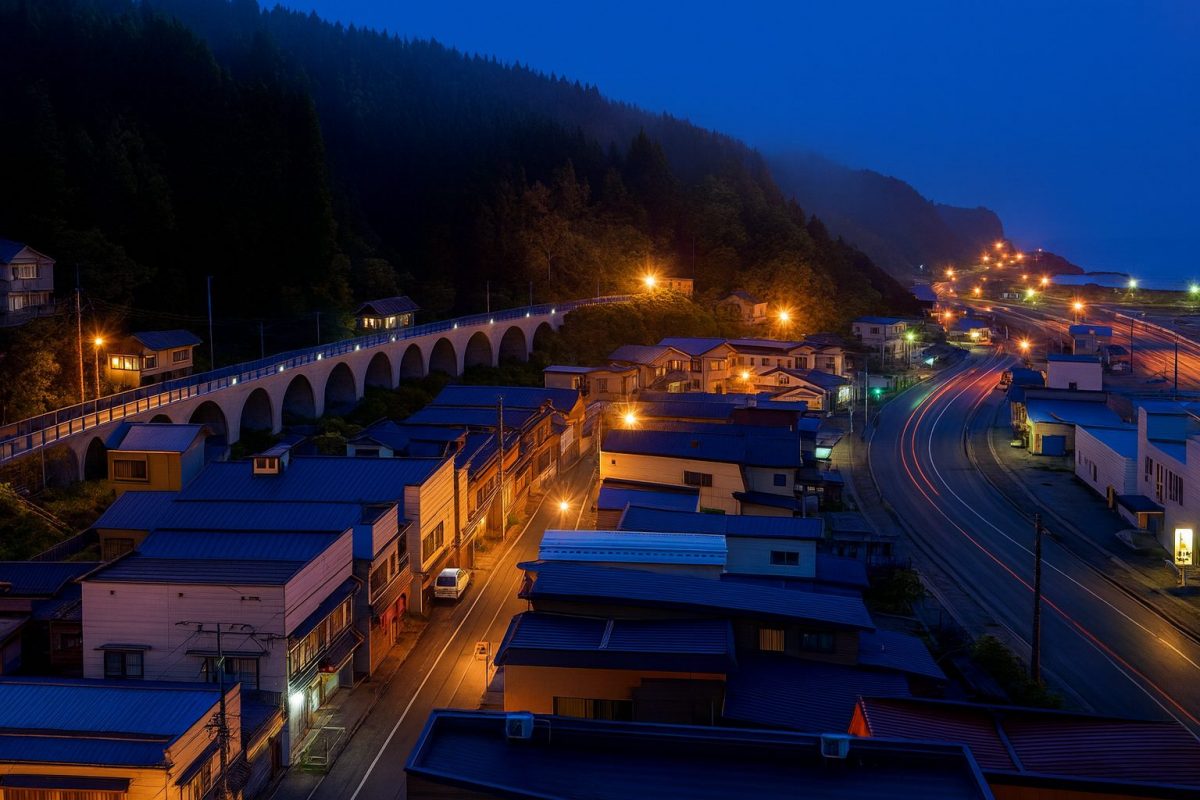
Kazamaura Village, located in the northern part of the Shimokita Peninsula in Aomori Prefecture, is one of the northernmost settlements on Honshu, facing the Tsugaru Strait. Its origins trace back to the early development of the region during the Nara period, and during the Sengoku era it flourished under the rule of the Nanbu clan. In 1889, the former villages of Shimofuro, Ikokuma, and Hebiura merged to form present-day Kazamaura Village. Much of its land is occupied by the steep mountains of the Osorezan Range, where rugged slopes extend directly to the sea and small pockets of flat land host its coastal communities. Fishing has long been the village’s primary industry, supported by the rich marine environment of the Tsugaru Strait, known for monkfish, squid, sea urchin, kelp, and other high-quality seafood. Meanwhile, Shimofuro Onsen, a historic hot spring area, has served as a well-known therapeutic bath destination since the feudal era. Daily life in Kazamaura is shaped by the interplay between sea and mountains, with a cultural backdrop enriched by the local Tsugaru dialect and seasonal customs. The village’s unique landscape, combining dramatic coastlines and mountainous terrain, also draws attention for its natural observation opportunities and geo-ecological features.
Culture & Traditions
Kazamaura Village is deeply shaped by its long-standing relationship with the sea. The coastal settlement of Shimofuro has thrived as a therapeutic hot spring district since the Edo period, providing rest and recovery for local fishermen and travelers. The villagers commonly speak a local variation of the Tsugaru dialect, whose expressive and rhythmic tones give the region its distinct character. Fishing traditions form the core of the community’s culture, and seasonal events, maritime rituals, and district-specific ceremonies are still observed today. In recent years, the village has introduced creative tourism events utilizing its marine resources, the most notable being the “Ganso Ikasama Race,” where live squid compete in a race—a unique attraction recognized nationwide. Stories, folklore, and ecological knowledge passed down through generations vividly portray the resilience of people who have lived in harmony with both sea and rugged mountains.
Local Specialties
- Monkfish (Anko): The steep underwater topography off the coast creates ideal fishing grounds for monkfish. Fresh, high-quality monkfish is enjoyed in hotpot dishes, fried preparations, and various seasonal recipes.
- Surume Squid: The Tsugaru Strait is an important migration route for squid. Surume squid landed at ports such as Shimofuro are thick, flavorful, and known for their excellent texture.
- Kombu & Funori: Locally harvested kelp and funori seaweed have a rich aroma and are widely used in soups, vinegared dishes, and traditional cuisine.
- Sea Urchin (Uni): From summer to early autumn, both purple sea urchin and green sea urchin are harvested. Their rich sweetness and depth of flavor make them one of the village’s premium products.
Annual Events
- Ganso Ikasama Race (July–November, twice weekly): Held at the Live Squid Storage Center, this event features live squid racing along a special course. It is a signature attraction unique to Kazamaura Village.
- Shimofuro Onsen Festival: A traditional event held in the historic onsen district. Local rituals, entertainment, and market stalls create a festive atmosphere.
- District Festivals and Ceremonies: Each community—Shimofuro, Ikokuma, and Hebiura—hosts its own maritime and seasonal events, preserving local traditions and communal bonds.
Access
- By Shinkansen: From Tokyo, take the Tohoku Shinkansen “Hayabusa” to Shin-Aomori Station (approx. 3 hours). From Shin-Aomori or Aomori Station, transfer to highway buses and then to Shimokita-area buses that reach Kazamaura.
- By Air: Flights from Haneda Airport to Aomori Airport take about 1 hour 30 minutes. From the airport, travel to Aomori Station and then connect to buses bound for the Shimokita region.
- By Ferry: The Tsugaru Strait Ferry runs between Hakodate and Ooma (Ōma). From Ōma, Kazamaura Village is accessible by local bus in about 20 minutes.
- By Car: From Aomori City, follow National Route 279 north for approximately 2 hours 20 minutes. From Mutsu City, the village is about 50 minutes away.
- Local Transportation: Shimokita Kōtsū’s “Sai Line” bus runs along Route 279, connecting major districts within Kazamaura and neighboring municipalities.
Tourist Attractions
- Shimofuro Onsenkyo – A historic therapeutic hot spring district dating back to the Edo period, offering scenic coastal baths and a nostalgic atmosphere.
- Kuwahata Onsen “Yun-Yun♪” – A village-run hot spring facility featuring ocean views and a restaurant serving fresh local seafood.
- Live Squid Storage Center – A rare facility that keeps squid alive for processing and exhibitions. It also hosts the popular squid race events.
- Kaikyō Isaribi Park – A scenic lookout offering views of Hokkaido across the Tsugaru Strait, featuring the Yasushi Inoue Literary Monument and the Niijima Jō Landing Memorial.
- Strait Memorial Road – A walking trail built on the remnants of the planned Ōma Railway, ideal for light hiking and seafront scenery.